

Why a Second Nationality
One passport decided your past.
Don't let it decide your future.
Eight quiet costs your first passport is charging your family right now — and the legal, government-authorised path that resolves every one of them.
Why this matters now
Your passport is no longer neutral.
For most of the twentieth century, a passport was a quiet thing. It sat in a drawer between trips. It defined where you were born — and very little else.
That world is gone.
Today your passport decides which bank will open an account for you, which border will let you through without a wait, which hospital your child can be treated in, which currency your savings are held in, and which government has the legal right to call you home in a crisis.
The passport you were born with is no longer a piece of paper — it is a price tag. And for a growing number of families, that price has become more than the family is willing to pay.
A second nationality is not a luxury item. It is the legal instrument that ends that pricing power. It is the difference between a family that has options and a family that has only hope.

Section one
The Eight Quiet Costs
Every one of the following has been said, word for word, by a PassPro client across a desk in Dubai. They are not theoretical. They are the lived price of holding only one passport in 2026. We pair each one with the legal answer a second nationality provides — and with the part of that answer that only an authorised agent like PassPro can deliver.
"I lose three days every trip on visa paperwork I shouldn't have to do."
Time, dignity and deals evaporate at consulate windows. The cost is not the visa fee — it is the meeting you missed, the deal you couldn't close in person, and the slow erosion of being treated as a planner instead of a petitioner.
Why a second nationality answers it
A second passport from a programme with broad visa-free or visa-on-arrival access turns most of those queues into a boarding pass. Travel becomes a calendar decision, not a paperwork project.
Why you want PassPro on the file
Visa-free lists shift quarterly. We verify each destination against the live government source for your specific second-passport before you book — never against a third-party index.
"If something breaks at home, my family has nowhere to go on Tuesday morning."
Currency controls, sudden travel bans, school closures, a phone call at 2 a.m. The fear isn't paranoia — it's the preparation that never gets done because the family assumed the country would always allow the option.
Why a second nationality answers it
Citizenship is a permanent right of entry and residence. It cannot be revoked by a foreign embassy on a bad news day. A second nationality is your family's exit-ready insurance — purchased calmly, before the calm ends.
Why you want PassPro on the file
Most families wait until they urgently need it. By then the timeline is wrong. We build the file with you in good times, so the document exists before the day you need it.
"Every banker, fund and exchange treats my passport like a red flag before they've read my file."
Compliance officers are paid to pattern-match. The wrong passport caps the size of the account, the speed of the wire and the appetite of the counterparty — long before due diligence ever begins.
Why a second nationality answers it
A second nationality from a well-regulated jurisdiction resets the first signal. Onboarding becomes a conversation about your business — not a defence of your birthplace.
Why you want PassPro on the file
Banking the new citizenship correctly is half the value. We coordinate the file so the passport, the proof of address and the source-of-funds package present together — not in three uncoordinated emails.
"Three banks have closed our accounts in two years. We're running out of jurisdictions."
De-risking is not personal — it is mechanical. Once your nationality flags a region a bank has exited, the next bank inherits the same answer, faster. Every closure shortens the runway for the next one.
Why a second nationality answers it
A second passport from an FATF-aligned programme moves you out of the flagged set on day one — and gives you a clean second identity to onboard the relationship that should have been simple.
Why you want PassPro on the file
Picking the wrong programme makes the banking wall worse. Our compliance protocol screens every recommendation against current bank acceptance — not a brochure from five years ago.
"We've been on a residency track for eleven years. We're still not citizens. We're still not free."
Long-residency citizenship rewards patience the family does not have. Schools, health decisions and life-changing opportunities will not wait a decade for a stamp.
Why a second nationality answers it
Caribbean Citizenship by Investment delivers full citizenship — not residency — in months, not decades. The waiting room closes.
Why you want PassPro on the file
Files fail on small things: a misnamed document, a missing apostille, a translator who isn't accepted by the CIU. We have submitted thousands. The reason we can publish a refund guarantee (terms and conditions apply) is because we already know what kills a file.
"The best specialist for our daughter is in another country and they don't accept our insurance or our visa."
Healthcare is the moment passports stop being abstract. A border between a family and the right doctor is the cruellest tax a passport can charge.
Why a second nationality answers it
A second nationality gives a family the legal right to enter, stay and pay for care in jurisdictions with the depth of medical infrastructure their home country does not offer.
Why you want PassPro on the file
We don't just file the application — we map the second nationality against the specific clinical and insurance routes the family actually needs. The passport is the unlock; the planning around it is the value.
"Everything we have — house, business, passport, school, doctor — is in one country. One bad policy and we lose all of it at once."
Diversification is the first rule of every portfolio except, somehow, the passport portfolio. The family that diversifies its assets but not its citizenship is one election away from a fire sale.
Why a second nationality answers it
A second nationality is geopolitical diversification. It separates the country you live in from the country that legally owes you protection — so a bad year in one is not a bad year in everything.
Why you want PassPro on the file
We model the second nationality against your tax residence, your operating company and the school your children attend. The goal isn't a passport — it's a defensible second life, drawn on a map you can show your family.
"I built this so my children could choose. Instead they inherit my limits."
The most successful first-generation families discover, late, that wealth without mobility is not freedom — it is a gilded ceiling that simply repeats for the next generation.
Why a second nationality answers it
Caribbean CBI is multi-generational by design. Eligible children — and, in several programmes, grandparents and unmarried siblings — receive the same citizenship under one application. The ceiling is removed for everyone you love at once.
Why you want PassPro on the file
The eligible-dependents list differs by programme and changes by Cabinet decision. We map your family today against each programme's current rules — so the file includes every person who can be included, and no one who can't.

Section two
Why a Second Nationality Is the Answer
Every one of the eight costs above shares a single root: your legal relationship with the world is controlled by a document you did not choose. A second nationality changes the document.
That is not a marketing line. It is a legal fact. Citizenship is one of the very few permanent, non-revocable instruments a family can own. It outlasts visas, residencies, tax rulings, embassy moods and political cycles. It is the only asset on the family balance sheet that no foreign government can cancel by changing its mind on a Wednesday.
What that single instrument delivers, in practice, is the following eight permanent rights — each one mapping back to a pain on the previous pages.
Mobility
Travel as a planner, not a petitioner. Broad visa-free and visa-on-arrival access, confirmed against destination-government rules at the time of travel.
Optionality
The legal right to enter, work, study or retire in another sovereign jurisdiction. The option you may never need is the option you cannot afford to be without.
Banking access
Reset the first signal at compliance desks. Open accounts, custodians and brokerage relationships in jurisdictions where your first passport was a closed door.
Healthcare access
The legal right to enter, stay and pay for care in jurisdictions with the medical depth your home country may not offer.
Diversification
Separate where you live from the country that legally owes you protection. A bad year in one is no longer a bad year in everything.
Tax structure
Become a genuine resident — not a paper one — in jurisdictions structured for international families. Executed within the law, within treaties you can defend.
Family protection
Spouse, eligible children and qualifying parents — and in several programmes, grandparents and unmarried siblings — included under one application.
Generational legacy
Pass citizenship to descendants under the host country's nationality laws. The first passport you choose may be the last one your family ever has to apply for.

Section three
The Five Caribbean Programmes
Five Commonwealth Caribbean nations operate Citizenship by Investment programmes today. Each is established by domestic legislation and administered by a dedicated government unit. PassPro is a Government Authorised Agent — every application is submitted directly through the official channel each programme requires.
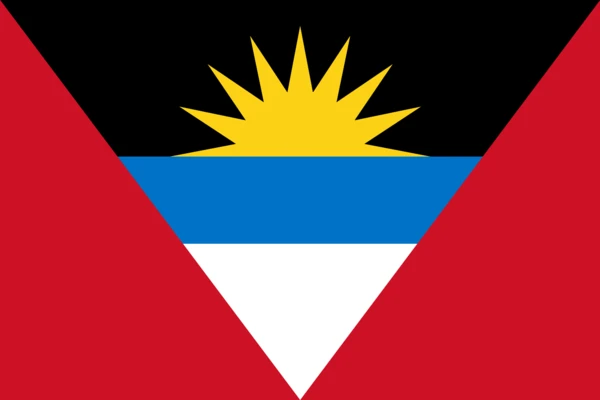
Antigua & Barbuda
Investment routes include the National Development Fund, approved real estate, the University of the West Indies Fund, and approved business investment. Family structure: principal applicant, spouse, eligible children and qualifying parents/grandparents under government rules.

Commonwealth of Dominica
Investment routes include the Economic Diversification Fund (EDF) contribution and approved real estate projects. Family structure: principal applicant, spouse, eligible dependent children, dependent parents/grandparents under government rules.

Grenada
Investment routes include the National Transformation Fund and approved real estate. Grenada has a treaty with the United States permitting Grenadian citizens to apply for the E-2 Treaty Investor visa, subject to U.S. requirements.
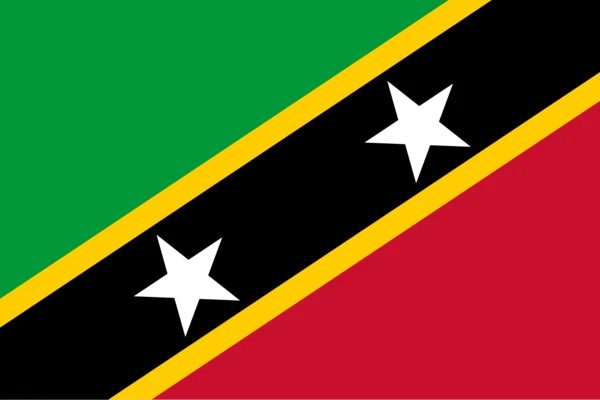
Saint Kitts & Nevis
The oldest Citizenship by Investment programme in the world, established 1984. Investment routes include the Sustainable Island State Contribution and approved real estate. Programme rules and fee structures are set by Cabinet and published through the CIU.

Saint Lucia
Investment routes include the National Economic Fund, approved real estate, approved enterprise projects and government bonds. Programme overseen by the CIP Saint Lucia Board under the Citizenship by Investment Act.

Section four
Europe Is Changing the Rules
Two new European systems are reshaping what "visa-free" means in 2026. Both apply to every non-EU short-stay traveller, including holders of Caribbean CBI passports. Both are summarised here only from the European Commission's own portals — never from third parties.
Entry/Exit System (EES)
Now fully operational across the Schengen Area
EES is the European Union's automated entry/exit register for non-EU short-stay travellers. Passport stamps are being replaced by a digital record: name, travel document, biometric data (fingerprints and facial image) and the date and place of every entry and exit at any Schengen external border.
What it changes: the 90-days-in-any-180 short-stay calculation is now enforced automatically. Overstays are recorded the moment they happen. First-time registration takes longer at the border; subsequent entries are faster.
European Travel Information & Authorisation System (ETIAS)
Expected to start in the last quarter of 2026
ETIAS is a pre-travel authorisation requirement for visa-exempt non-EU nationals visiting any of 30 European countries for short stays. It is not a visa: it is a security and migration pre-check linked to the traveller's passport.
Fee: €20 per application (with exemptions, including for applicants under 18 and 70 and over).
Validity: up to three years, or until the linked passport expires — whichever is earlier.
Decision: most applications are expected to be approved within minutes; some take longer if additional checks are required.
For Caribbean CBI holders: visa-free access to the Schengen area continues, but a valid ETIAS authorisation will be required before boarding. PassPro confirms each client's ETIAS eligibility against the live European Commission portal at the time of travel.
Section five
Why PassPro
Citizenship by Investment is one of the very few decisions a family will make where the difference between a successful outcome and a denied file is not the investment amount — it is who is holding the pen.
Every Caribbean CBI programme covered in this briefing accepts applications only through a Government Authorised Agent. There is no "direct to government" shortcut. The question is not whether you will use an agent — the question is which one. The cost of choosing the wrong one is not measured in fees. It is measured in delays, refusals and a permanent file on the client at the CIU.
A refused file
A Citizenship by Investment Unit refusal is recorded against the applicant for life. The next agent inherits the file. The next programme sees it. The decision compounds.
How PassPro prevents it
PassPro does not submit a file we have not stress-tested against the current CIU's due-diligence checklist. The reason we can publish a refund guarantee on accepted files (terms and conditions apply) is because we already know what kills one.
A wasted year
Misnamed documents, missing apostilles, an unaccepted translator, an inadmissible source-of-funds memo. Each one resets the clock. Families lose a year discovering this the slow way.
How PassPro prevents it
We have submitted thousands of files. The mistakes that cost a year for a first-time applicant cost an afternoon for us — because we have already made them, learned from them, and corrected them.
The wrong programme
Programmes differ on eligible dependents, restricted nationalities, banking acceptance and tax-residence interplay. A perfect application to the wrong programme is still a wrong outcome.
How PassPro prevents it
Our intake maps your family today against all five programmes' current rules — not last year's. We recommend the programme that fits the family you have, not the brochure that pays the highest commission.


Section six
How to Begin
The first conversation with PassPro is not a sales call. It is an eligibility conversation. We confirm your nationality, your dependents and your situation against each programme's current rules — and only then do we discuss fees. If a programme cannot accept your file, you will hear it from us first, in writing, with the source.
"One passport decided your past. Don't let it decide your future."