
Will Caribbean Passports Lose Schengen Access? What the 2028 Date Means
People are asking whether Caribbean passports will lose Schengen access, what the 1 June 2028 date means, and whether it is still worth applying. Here is the verified position, the distinction that matters for existing citizens, and how to decide.

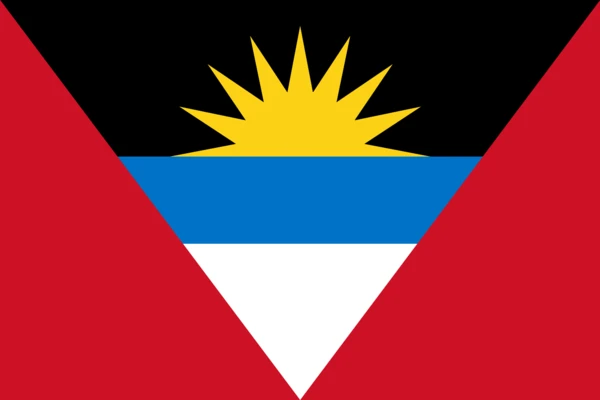
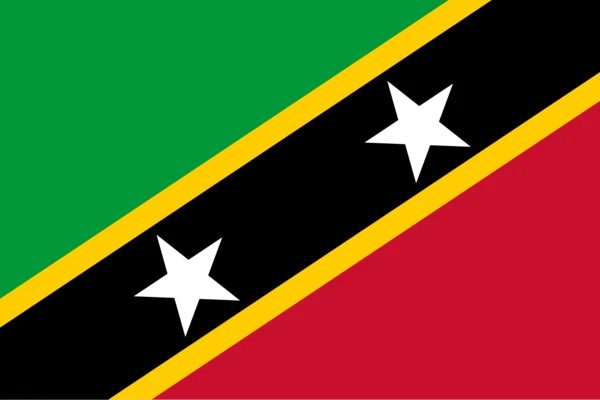
The European Union flag alongside the flags of the five Caribbean CBI nations.
The position in 30 seconds
The programmes remain open. The discussion is real, but its outcome is not settled.
- No closure of any of the five Caribbean programmes has been announced.
- No suspension of Schengen visa-free access has taken effect.
- A phase-out date of 1 June 2028 has been proposed, not agreed.
- Citizenship already lawfully granted is distinct from the travel privileges attached to a passport.
The headlines combine several different questions: whether applications remain open, what the European Commission has proposed, and what any future change could mean for people who already hold citizenship. Those questions do not have the same answer. The distinction matters.
Read the section that applies to you: Can I still apply? · What has the EU proposed? · What about citizenship already granted? · What should current clients do?
Official statement. Dubai, United Arab Emirates. Updated 4 August 2026. PassPro is a Government Authorised Agent advising on all five Caribbean Citizenship by Investment programmes: Antigua and Barbuda, the Commonwealth of Dominica, Grenada, Saint Kitts and Nevis, and Saint Lucia.
Is the EU shutting down the Caribbean citizenship by investment programmes?
No. As of 28 July 2026, no closure of any of the five Caribbean programmes has been announced, and no suspension of Schengen visa-free access has taken effect. All five programmes remain operational. Applications continue to be accepted and processed under their existing laws and regulations.
What has happened is narrower than the headlines suggest: the European Commission has formally raised concerns regarding investor-citizenship programmes and has asked the relevant governments to discuss their future. A discussion is not a decision, and a concern is not a closure.
What exactly has the European Commission proposed?
Within those discussions, a phase-out timeline ending on 1 June 2028 has been proposed. A proposal is what it is: a position under negotiation. It is not an agreed, final, or legally binding deadline, and it should not be reported or relied upon as one.
Each of the five governments must ultimately determine and formally communicate its own national position. Until a government or its Citizenship by Investment Unit issues a verified official communication, nothing about any individual programme has changed.
Does any of this affect citizenship that has already been granted?
One distinction matters more than any headline: if visa-free travel arrangements were ever to change, that change would affect the travel privileges associated with the passport, not the validity of the citizenship itself. Citizenship, once lawfully granted, is a legal status. It does not lapse because a travel arrangement is renegotiated.
Holders of Caribbean citizenship therefore retain their legal status in full under any scenario currently under discussion. What is being negotiated in Brussels concerns border arrangements, not nationality.
How are the Caribbean governments responding?
The Eastern Caribbean governments are engaging with the European Union and have agreed to pursue a coordinated diplomatic response, while each retains the sovereign right to determine its own position. Their joint position is recorded in the official statement by the participating Heads of Government.
PassPro advises on all five jurisdictions, and for that reason we will not speculate, and we will not apply the position of one country to another. We will provide programme-specific guidance when, and only when, the relevant government or its Citizenship by Investment Unit issues a verified official communication.
The distinction to keep
Programme status, citizenship status, and visa-free travel are three separate matters.
A discussion about a programme’s future does not close that programme today. A possible future change to visa-free travel does not, by itself, revoke citizenship. Good advice starts by keeping those legal and practical questions separate.
What should clients with applications in process do?
Nothing changes today. There is no confirmed change to any application in process as of 28 July 2026. PassPro will contact affected clients directly should any official development touch their case, their programme’s requirements, or the travel privileges attached to it. Updates are issued through our official client channels as verified information becomes available.
We recommend relying only on verified communications from the European Union, the respective governments, and their Citizenship by Investment Units, rather than headlines or unconfirmed commentary. Periods of discussion reward the same qualities that a well-built application does: patience, accuracy, and counsel that answers to the family rather than to the moment.
Frequently asked questions
Can I still apply for Caribbean citizenship by investment in 2026?
Yes. All five programmes (Antigua and Barbuda, Dominica, Grenada, Saint Kitts and Nevis, and Saint Lucia) are open and processing applications under their existing laws. The EU discussions have not changed eligibility, requirements, or processing in any of the five jurisdictions as of 28 July 2026.
Is it still worth applying for Caribbean citizenship in 2026?
It depends on your objective. If your primary reason is visa-free short-stay travel into the Schengen Area, that specific benefit is the subject of the current discussion, and it is worth weighing carefully before you proceed. If your objective is broader, such as optionality, a second legal home, family continuity, and mobility beyond Europe, much of the value of a Caribbean citizenship is unaffected by what is being discussed. The right answer follows from your specific objective, tested against a realistic view of the next several years. As an adviser retained by families rather than by any programme, that assessment is the work we do before recommending anything.
Is 1 June 2028 a confirmed closing date?
No. It is a proposed timeline raised within EU discussions. No government has agreed to it, no legislation enacts it, and no Citizenship by Investment Unit has announced a closing date. If that changes, the change will come as an official government communication, and PassPro will advise clients programme by programme at that point.
Will my Caribbean passport stop working for travel to Europe?
No suspension is in effect. Schengen visa-free access continues as before. Separately, and unrelated to these discussions, all visa-exempt travellers to the Schengen Area will in time need ETIAS pre-travel authorisation, a registration step rather than a visa. Our guide to how ETIAS works for Caribbean passport holders explains that process.
If a programme did close in the future, what would happen to citizenship already granted?
Citizenship lawfully granted is a legal status held under the constitution and citizenship law of the granting country. Programme closures, where they have occurred elsewhere in the world, ended new applications; they did not revoke citizenships already conferred. Any future change to travel arrangements would affect border privileges, not nationality.
Which are the five Caribbean citizenship by investment programmes?
Antigua and Barbuda, the Commonwealth of Dominica, Grenada, Saint Kitts and Nevis, and Saint Lucia. These five Eastern Caribbean states operate the region’s investor-citizenship programmes, each administered by its own government through a dedicated Citizenship by Investment Unit.
Does this affect Vanuatu?
Vanuatu is a Pacific jurisdiction outside these discussions, and its Schengen arrangements were addressed separately by the EU in earlier decisions. PassPro advises on Vanuatu independently of the five Caribbean programmes; guidance on one is never applied to the other.
This statement is provided for general informational purposes only and does not constitute legal, tax, or investment advice. Programme rules and regulatory positions are subject to change. Clients should rely on official government and Citizenship by Investment Unit communications and seek tailored professional advice regarding their individual circumstances.



Have a specific question?
A senior advisor will answer it directly. Free, no obligation.
Begin a Confidential Conversation