
Pirates of the Caribbean: The Filming Locations Hidden in Your New Citizenship
Most viewers of the trilogy never realise how much of it was shot in real, visitable Caribbean places — chiefly in Dominica. A senior advisor's quiet guide to the cinematic landscape of the five CBI countries.
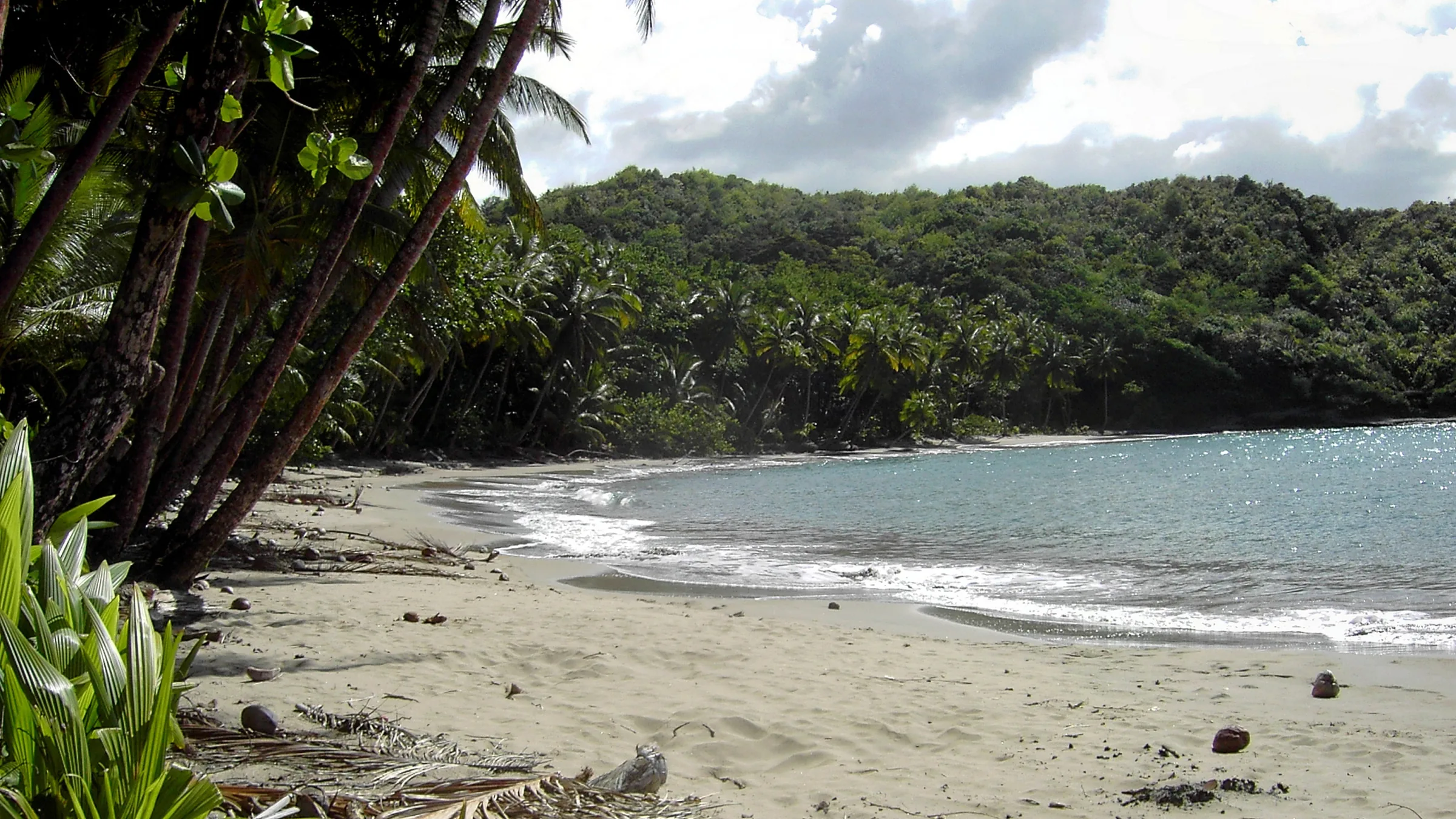
Hampstead, on Dominica's north coast — the unbuilt Caribbean that drew the trilogy to shoot here.
One of the quieter pleasures of holding a second citizenship in the Caribbean is the realisation, gradually, that places you have seen on screen for two decades are real places. They sit a short drive from a guest house. They can be visited on a morning. No filter, no set dressing, no production crew — just the country itself.
The Pirates of the Caribbean trilogy is the clearest example. Most viewers assume the films were shot on a Hollywood lot, or perhaps on a private resort island closed to outsiders. They were not. The cannibal beach in Dead Man’s Chest, the mangrove paddle to Tia Dalma’s home, Jack Sparrow’s flight through the jungle — these are recognisable locations on a real Caribbean island, and that island happens to be one of the five whose citizenship our clients hold.
This piece is for the principals who, somewhere between the second and third year of their citizenship, find themselves curious about the place itself. We have written it as a quiet locations guide — what we know about, what we have visited, and where we are happy to make introductions to the right local guides for clients who would prefer not to arrive cold.
Dominica — the heart of the Pirates trilogy
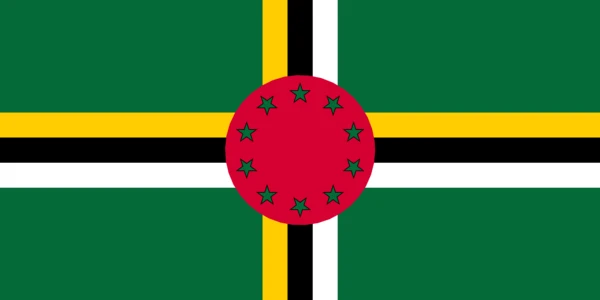
A great deal of Pirates of the Caribbean: Dead Man’s Chest (2006) and Pirates of the Caribbean: At World’s End (2007) was filmed on Dominica. The director, Gore Verbinski, chose the island over more conventional Caribbean destinations precisely because it had not been built up — the volcanic interior, the river systems, the dark-sand beaches and the cliff lines remained in a condition that allowed the productions to film cleanly without removing modern infrastructure from frame.
A handful of the locations are well known to islanders and can still be visited.
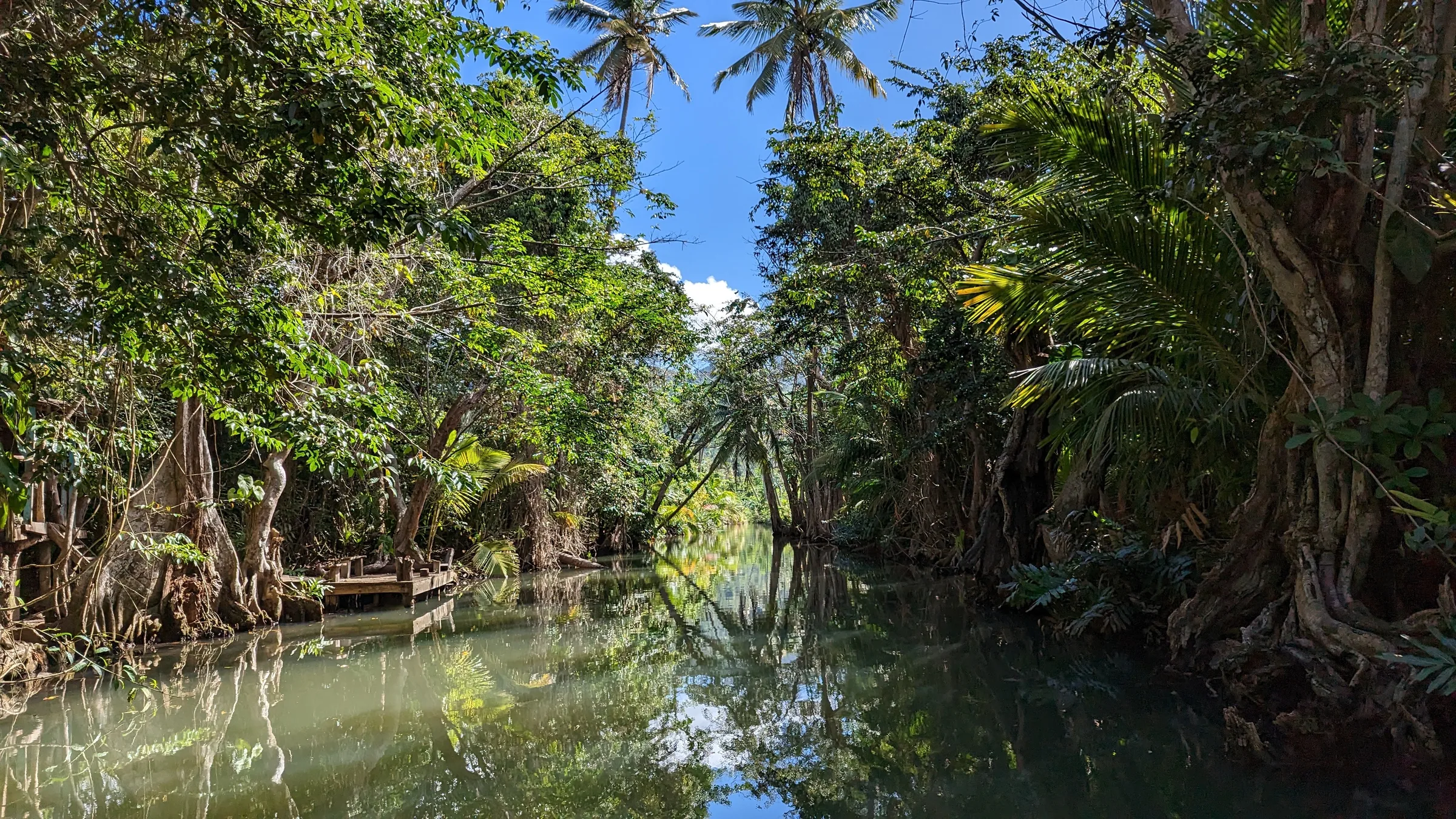
Indian River, on the north-west coast near the town of Portsmouth, is where Captain Jack and his crew row up a tangled mangrove channel toward Tia Dalma’s stilt house. The film added the house; the river itself is exactly as it appeared. The boatmen who row visitors up the river today include several who worked on the production. It is, at any time of day, one of the most atmospheric short journeys you can take in the eastern Caribbean.
Hampstead Beach (also known as Number One Beach), on the north coast, is where the cannibal scenes were shot. The dark sand, the cliffs behind, the small surf — all real and unchanged. There is no plaque, no signage, no tourist apparatus. You arrive, you walk along the beach, and you recognise it.
Titou Gorge, near Laudat in the interior, is the narrow basalt slot canyon Jack Sparrow runs through during the Pelegosto escape sequence. Today it is a swimmable gorge with a small waterfall; visitors swim into the canyon and back. It also lies on the entry to the Boiling Lake trail, which is its own day’s work and worth doing in its own right.
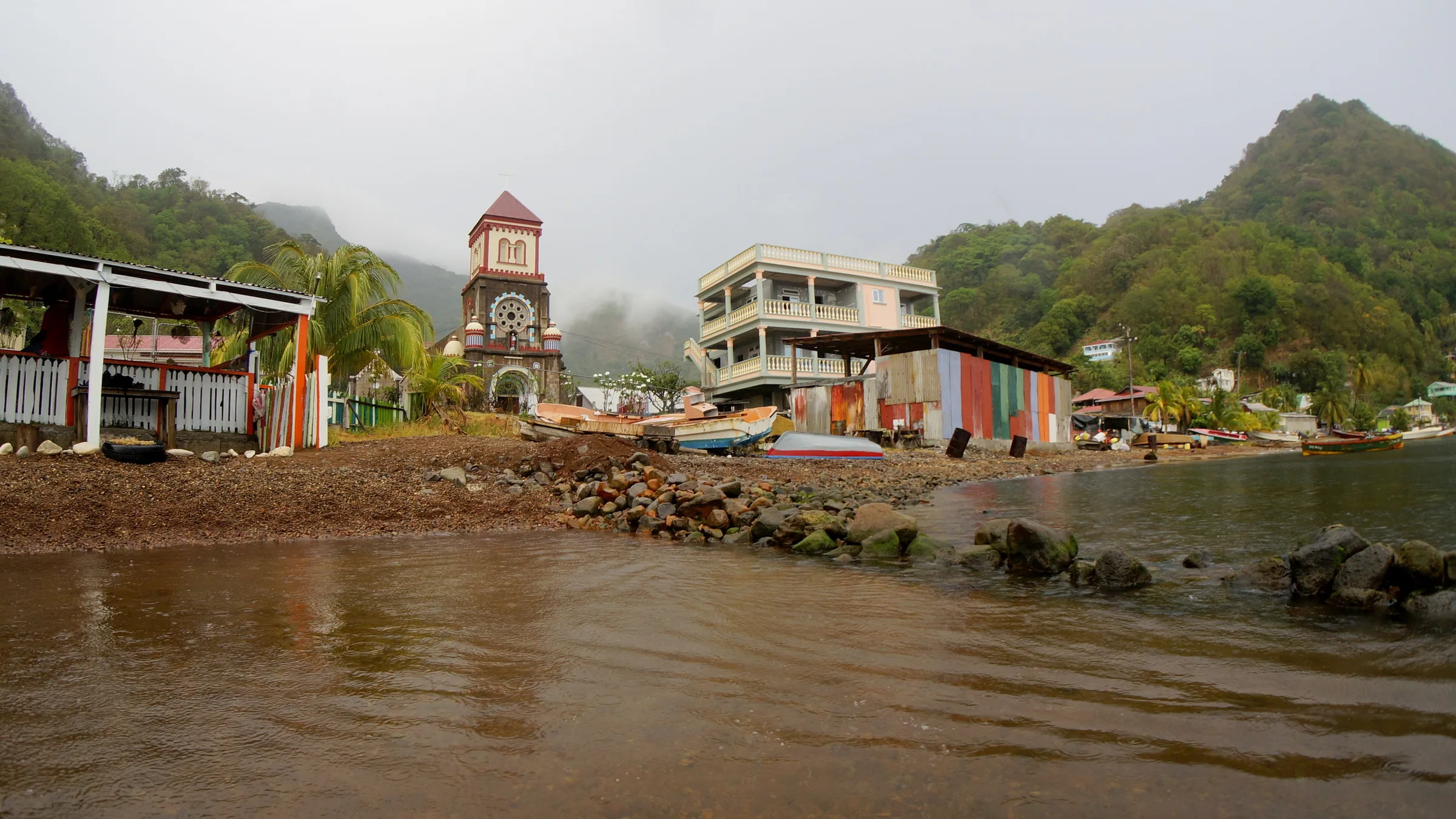
Soufrière Bay, on the south-west coast, provided the black-sand beach and bay shots used across both films. The fishing village itself is intact, the boats still pulled up at first light, and the bay opens to a sulphur-rich coastline that resembles nothing else in the region.
Vieille Case, the small village in the far north, was used for the village scenes in Dead Man’s Chest. The wooden houses, the church on the hill, and the road through the village all appear on film. The village itself remains a quiet place.
For citizens who travel through Dominica with even a passing interest in the trilogy, these sites are reachable in two unhurried days. Most are best visited with a guide who knows the road conditions; we are happy to recommend one when the time comes.
Beyond Pirates — the wider cinema of the Caribbean Five
The other four CBI countries have a quieter but real cinematic history. The productions are not always blockbusters, but the locations have hosted some of the most evocative on-screen work of the last seventy years.
Antigua and Barbuda has been used as the setting for a number of feature productions over the years, particularly around English Harbour and Nelson’s Dockyard, whose Georgian-era restoration provides a backdrop that very few Caribbean destinations can match. The sailing scenes that drift through travel programmes set in the eastern Caribbean tend, more often than not, to have been shot off Antigua’s south coast. The country’s twin-island geography makes it a natural location for productions that want both built heritage (English Harbour) and unbuilt coastline (Barbuda’s flamingo lagoon and beaches).
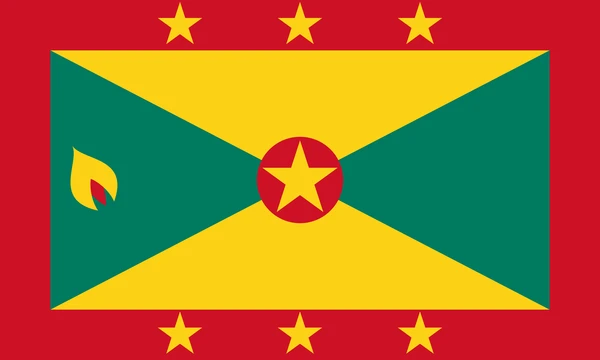
Grenada has the longest-standing screen history of the five. Island in the Sun (1957), directed by Robert Rossen with James Mason and Joan Fontaine, was filmed partly across Grenada and the surrounding islands. More recently Water (1985), with Michael Caine, used Grenadian and Saint Vincent locations to stand in for a fictional Caribbean state. The country’s spice estates and the steep wooded interior continue to draw production work for documentaries and feature shorts.
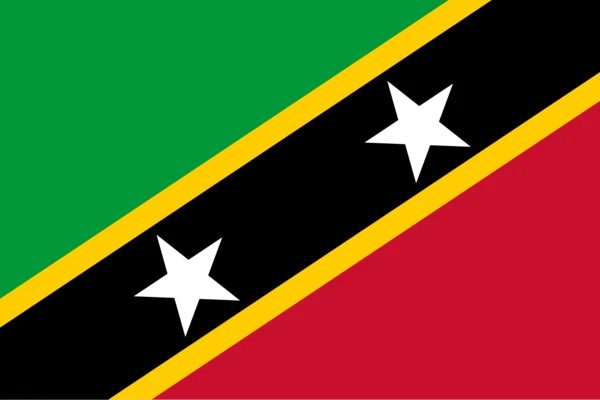
Saint Kitts and Nevis has supplied location footage for nature programming and travel cinema for decades, with the colonial-era plantations of Nevis and the volcanic interior of Saint Kitts both serving as backdrops for a steady, quieter stream of productions. The Brimstone Hill fortress and the railway line that traces the perimeter of Saint Kitts have appeared in feature television several times — the country tends to be filmed for atmosphere rather than narrative.
Saint Lucia has hosted a string of productions over the years that have made use of the twin Pitons, the Soufrière volcanic landscape, and the rainforest interior. Doctor Dolittle (1967), with Rex Harrison, included substantial location work in Saint Lucia. The island has also served as a location for a number of romantic features and travel-cinema productions, where the Pitons in particular function as a visual signature recognisable in any frame.
A practical note on visiting
The locations that have featured in cinema are almost never marked. There are no plaques. There are no organised tours of the kind that exist in New Zealand for the Lord of the Rings or in Iceland for the recent television productions. The Caribbean has, on the whole, declined to commercialise its film history, and the result is that the sites remain in the condition they were filmed in.
For clients who wish to visit, we are happy to make introductions to local guides — boatmen on the Indian River, drivers familiar with the back roads, fishermen at Hampstead. Most are introductions made one citizen to another; the islands are small, and the people who worked on the productions tend to still live there.
If you would like to spend a week walking through the Caribbean of the screen — and the Caribbean of your new citizenship — a senior advisor will help you plan it. It is, as a small pleasure, one of the things this firm has come to enjoy doing for the families that stay with us.

Have a specific question?
A senior advisor will answer it directly. Free, no obligation.
Begin a Confidential Conversation