
The History of Vanuatu: From the New Hebrides Condominium to a Pacific Republic
A short history of Vanuatu — the unique Anglo-French Condominium arrangement of the New Hebrides, the road to independence in 1980, and the modern republic whose citizenship principals are considering today. Context that matters before evaluating a passport.
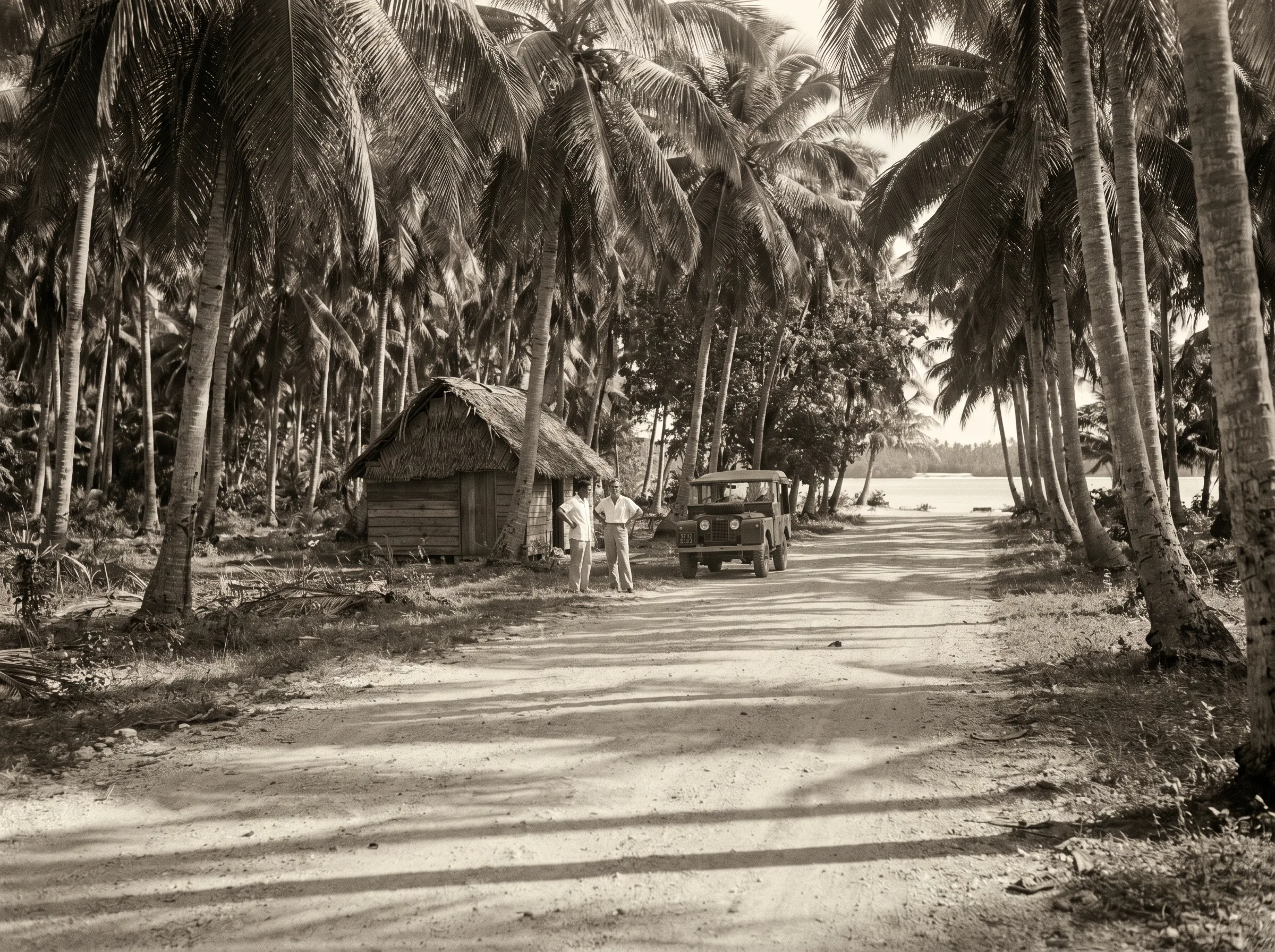
Vanuatu's island geography shapes both its history and its modern role in the Pacific
Before a principal seriously considers Vanuatu citizenship, it is worth understanding what Vanuatu is — historically, politically, and culturally. A passport is, in the end, an instrument issued by a sovereign state. The state issuing it matters. Vanuatu’s modern character is unusually clear-cut: a Pacific republic with a distinctive colonial history, an independent democratic tradition since 1980, and a coherent national identity built across more than a hundred languages and eighty inhabited islands.
This article is the brief, accurate history we keep for clients who want context before they make a citizenship decision. It is not exhaustive — but it is enough.
The islands before contact
The Vanuatu archipelago has been continuously inhabited for at least three thousand years. The Lapita people, ancestors of much of modern Pacific Melanesian and Polynesian society, settled the islands in waves starting around 1300–1100 BCE. Their characteristic pottery — geometric, intricate — is still excavated across the region today.
By the time European contact began in the seventeenth century, the islands supported a dense web of distinct communities, each with its own language, its own land relationships, and its own cultural practices. Some of those linguistic boundaries have survived intact into the present day, which is part of why Vanuatu remains one of the most linguistically diverse nations on earth — over 110 languages still spoken across a population of roughly 320,000.
European contact began in 1606, when the Portuguese-Spanish expedition led by Pedro Fernandes de Queirós reached Espiritu Santo. Captain Cook charted much of the archipelago in 1774 and named it the New Hebrides, after the Scottish island group. The name stuck for the next two centuries.
The Anglo-French Condominium (1906–1980)
What makes Vanuatu’s colonial period genuinely unusual — and historically important — is the formal arrangement under which it was governed for most of the twentieth century. From 1906 until independence in 1980, the New Hebrides were administered jointly by Britain and France under a structure called the Condominium.
This was not a colony in the conventional sense. It was a shared sovereignty agreement in which both powers held equal status. The practical consequences were striking: two separate police forces, two separate court systems, two separate education systems, two separate currencies in different periods, and two separate prison systems. A resident of the New Hebrides could choose, in many circumstances, whether to be governed by British or French law. Disputes between subjects of the two powers were handled by a third, Joint Court.
For three quarters of a century, no other inhabited territory in the world was governed quite this way. The arrangement was inefficient, often comical in its overlapping bureaucracy, and famously frustrating to almost everyone who lived under it. It also, against expectation, produced a generation of ni-Vanuatu leaders fluent in two European languages and accustomed to navigating two different administrative cultures simultaneously — a skill set that proved unexpectedly useful in the independence movement that followed.
The road to independence (1970s)
By the 1970s, the global wave of decolonisation that had reshaped Africa and the Caribbean reached the Pacific. The New Hebrides National Party was founded in 1971 (later renamed the Vanua’aku Pati), led by Father Walter Lini, an Anglican priest who would become the country’s first Prime Minister. The independence movement drew strength from a coalition of Anglophone, Francophone, traditional chiefly, and customary leadership — a coalition the Condominium structure had, ironically, helped create by forcing internal political organisation across linguistic and administrative lines.
The path was not entirely smooth. The Coconut War of mid-1980 — a brief secessionist effort on Espiritu Santo led by Jimmy Stevens with French settler and external libertarian-movement backing — briefly threatened the integrity of the new state. It was resolved within weeks through a combination of Papua New Guinea Defence Force intervention and political negotiation. The Republic of Vanuatu was declared independent on 30 July 1980, with Father Walter Lini as Prime Minister and George Sokomanu as President.
The new nation chose its own name: Vanuatu, from the Austronesian root meaning “land that endures.” It joined the United Nations the same year, the Commonwealth of Nations shortly after, and quickly established a non-aligned foreign policy that has remained broadly consistent ever since.
The modern republic
Modern Vanuatu is a parliamentary republic with a unicameral legislature of 52 members, a directly elected Parliament, a ceremonial President elected by an electoral college, and a Prime Minister chosen from the parliamentary majority. The judiciary is independent. The 1980 constitution establishes English, French, and Bislama (the local creole, the most widely spoken language in the country) as the three official languages.
Power in Vanuatu has been transferred peacefully through democratic elections for more than four decades. Coalition governments are common — the result of a fragmented multi-party system in which no single party regularly commands a parliamentary majority. The country is sometimes characterised by external observers as politically fluid, which is fair; it is rarely characterised as undemocratic, which is also fair.
The economy is built primarily on agriculture (cocoa, coconut, kava, beef), tourism, offshore financial services, and — over the past decade — citizenship by investment as a meaningful contributor to national revenue. Cyclones and seismic activity are real and recurring hazards, and the country has invested heavily in resilience and disaster response infrastructure since Cyclone Pam in 2015.
Citizenship by investment in context
Vanuatu’s citizenship by investment programme was formally introduced in 2017, building on earlier honorary citizenship and economic citizenship frameworks. From the start, it was structured as a donation route under the Citizenship Act, with revenue directed to national development priorities through the consolidated revenue framework.
The programme has changed substantially since its launch. The framework that exists in 2026 — with its strengthened Vanuatu Financial Intelligence Unit due diligence, refined dependant rules, and clearer regulatory oversight — is meaningfully different from the earlier framework that drew international criticism in the late 2010s and led to the 2022 suspension of the EU visa waiver. Today’s programme is more rigorous, more selective, and more carefully administered than the programme of five years ago.
For principals considering Vanuatu, what this history means in practice is that you are buying a relationship with a stable Pacific republic, one with a clear democratic tradition, an independent judiciary, three official languages reflecting genuine cultural plurality, and a citizenship framework that has matured into a regulated programme appropriate for serious advisory consideration.
We assess Vanuatu the same way we assess every option: against the principal’s actual mobility goals, family composition, source-of-funds posture, and commercial context. The country’s history is not the only thing that matters. But for the kind of decision a second citizenship represents — a multigenerational instrument, not a transactional purchase — knowing what kind of state issues the passport is, in our view, a reasonable place to start.
For our current view of the programme, eligibility, and family inclusion, see our Vanuatu cornerstone page and the companion article Am I Eligible for Vanuatu Citizenship?.
Sources for the historical content of this article include the Vanuatu National Statistics Office, the constitutional text of the Republic of Vanuatu (1980), and standard academic histories of the Pacific. Programme details should always be verified against current official sources at the Vanuatu Citizenship Office at the time of any engagement.
Have a specific question?
A senior advisor will answer it directly. Free, no obligation.
Begin a Confidential Conversation