Caribbean Citizenship by Investment Programmes: A 2022 Regional Roundup
A programme-by-programme review of the meaningful developments across the five Caribbean Citizenship by Investment jurisdictions in 2022 — and what those movements, taken together, revealed about the direction of the regional market.
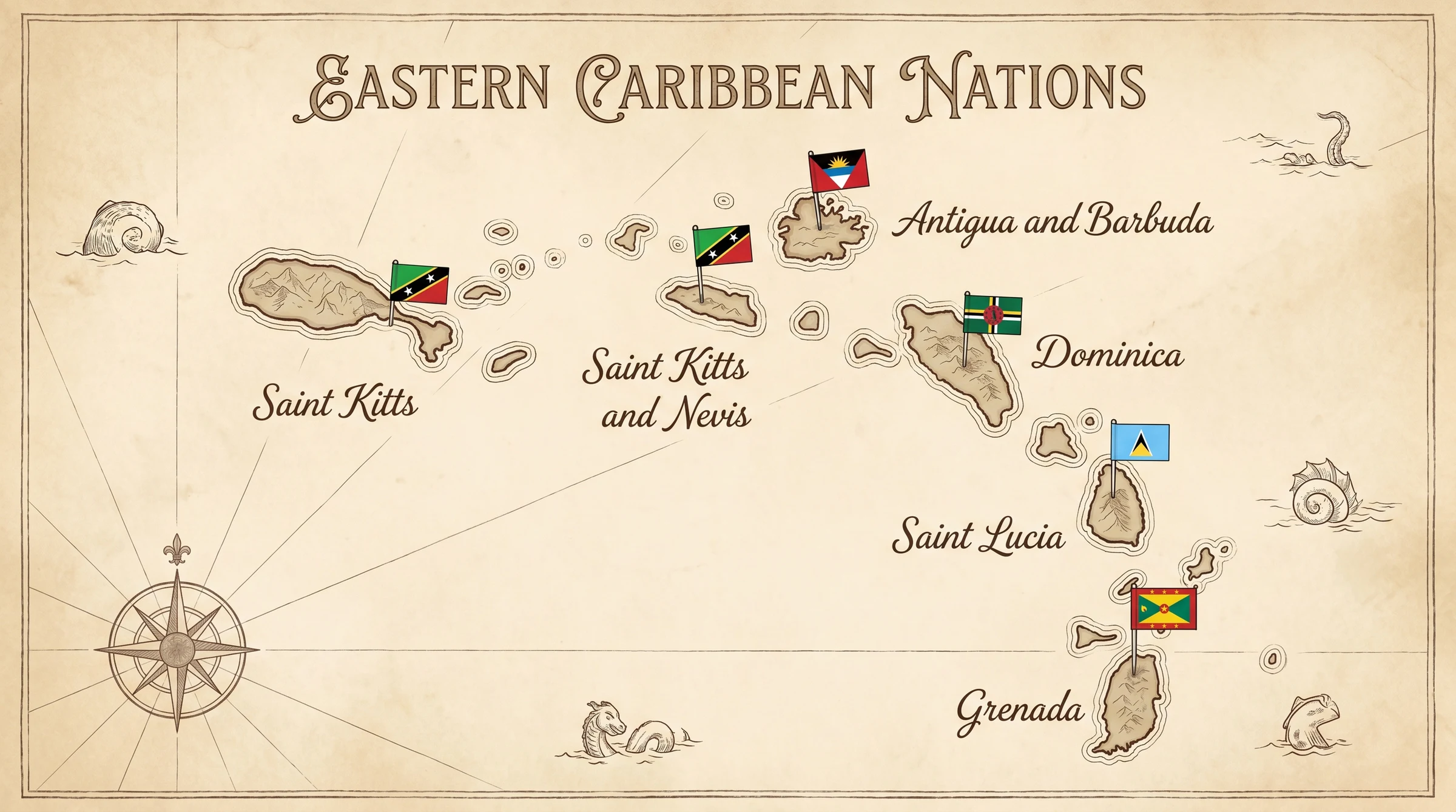
An editorial parchment-style map of the Eastern Caribbean with the flags of the five CBI nations marked.
The Caribbean Citizenship by Investment landscape moved on several fronts during 2022. Some shifts were responses to the regional competitive dynamic that had set in during the pandemic period; others were structural reforms that had been in preparation for longer. Taken together, the year revealed a market that was consolidating around tighter due-diligence standards, settled family pricing, and a quieter rhetorical register on the part of the issuing units.
This article summarises the developments programme-by-programme.
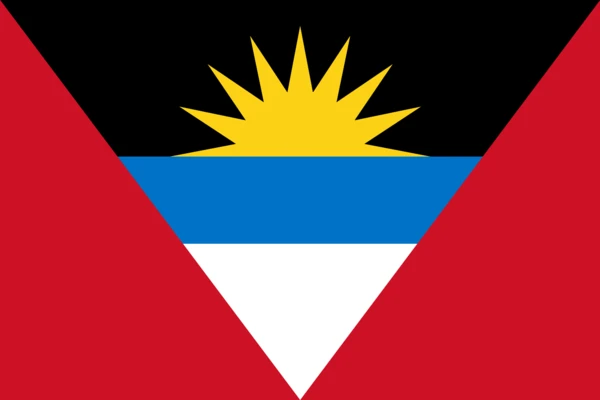
Antigua and Barbuda
Antigua and Barbuda’s 2022 was the quietest of the five programmes, and the quietness was deliberate. The reduced family-of-four contribution introduced in 2020 was formally retained, confirming that the lower entry point was the new baseline rather than a temporary instrument. The University of the West Indies route remained operational alongside the National Development Fund, and the CIP real estate threshold held at USD 400,000. The CIU’s communication through the year emphasised continuity: the framework was the framework, and the operational priority was to apply it consistently rather than to revise it. (Treated in more depth in the companion article on the Antigua programme’s 2022 movements.)
Commonwealth of Dominica
Dominica’s headline activity during 2022 sat on the family side of the programme’s economics. The Citizenship by Investment Unit recalibrated dependent-inclusion fees for larger families, particularly for parents and adult children added to the principal applicant’s file, narrowing the gap that had opened up between Dominica and Antigua for households of five or more. The Economic Diversification Fund (EDF) contribution remained at USD 100,000 for a single applicant.
On the real estate side, Dominica continued to approve hotel and resort developments under the CBI framework, with the qualifying threshold held at USD 200,000. The CIU also continued the practice of remote oath-taking and digital ceremony procedures that had been introduced during the pandemic, treating these as permanent operational features rather than temporary accommodations.
The directional reading was that Dominica was holding its position as the entry-level pricing leader at the single-applicant tier while quietly reinforcing its family proposition.
Grenada
Grenada’s distinctive 2022 development was the continuing role of the United States E-2 Treaty Investor visa, which the country’s citizens are eligible to apply for. This bilateral arrangement — unique among Caribbean CBI countries — increasingly differentiated Grenada in the regional market. Through 2022, applicant interest from principals whose primary mobility need was access to the United States moved markedly toward Grenada on the strength of E-2 eligibility, even where pricing was less competitive than Antigua or Dominica.
On the programme structure itself, the National Transformation Fund (NTF) contribution remained at USD 150,000 for a single applicant. The CBI-approved real estate threshold remained at USD 220,000 for a co-investment in a qualifying development and USD 350,000 for a standalone investment. The CBI Committee continued to maintain a tighter due-diligence regime than several peers, a positioning that the country’s officials had been signalling publicly through the year as a deliberate market differentiator.
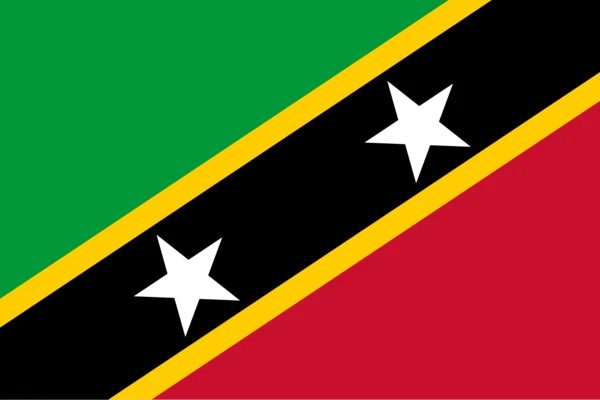
Saint Kitts and Nevis
Saint Kitts and Nevis used 2022 to advance the most visible due-diligence reforms of any Caribbean programme during the year. The CIU strengthened its applicant verification processes, expanded mandatory interview procedures, and introduced revised guidance for the country’s approved international marketing agents. These reforms were positioned as a response to the regional CARICOM and Eastern Caribbean Central Bank concerns that had been raised about the integrity of the CBI brand as a whole, and Saint Kitts — as the oldest of the five programmes — took the leading role in addressing them.
The Sustainable Growth Fund (SGF) contribution remained at USD 150,000 for a single applicant and the limited-time accelerated processing options that had been trialled were quietly wound back during the year, in favour of restored standard processing timelines and a heavier emphasis on thoroughness.
Saint Lucia
Saint Lucia’s 2022 developments centred on the bonds route. The National Economic Fund (NEF) contribution remained the core donation pathway at USD 100,000 for a single applicant. Discussion through the year focused on whether the Special Covid-19 Relief Bond — a non-interest-bearing government bond instrument introduced in 2020 with reduced thresholds — would be retained, modified, or wound down. The Cabinet’s decision through the year was to retain the relief bond on a continuing basis, with the recoverable bond holding period set at five years, providing a recoverable-investment alternative to the donation route that no other Caribbean programme matched at the same threshold.
The real estate route remained at USD 200,000 for qualifying developments. Saint Lucia continued to position itself as the most flexible of the five programmes on instrument design, while keeping pricing aligned with the regional baseline.
What the year revealed about the regional market
Three patterns are visible across the five programmes when 2022 is taken as a whole.
Family pricing settled. The family-of-four contribution levels that had emerged through the pandemic period were retained across the programmes that had introduced them. None of the issuing units reverted to pre-2020 family pricing during the year. This represented a permanent recalibration of the regional pricing structure.
Due diligence tightened. Every programme moved in the direction of stricter verification, longer file processing where flags appeared, and clearer published policies on restricted-country handling. Saint Kitts led the visible reforms; Grenada and Antigua maintained their own positions; Dominica and Saint Lucia followed. The collective effect was a regional brand that emerged from 2022 more credibly than it had entered.
Differentiation deepened. The five programmes ended 2022 looking less interchangeable than they had at the start. Grenada’s E-2 access, Saint Kitts’ due-diligence leadership, Antigua’s family pricing, Dominica’s entry-level economics, and Saint Lucia’s bonds route had become genuinely distinct positions. For applicants and advisors, the implication was that programme selection had become a more substantive analytical exercise — the right programme for a principal increasingly depended on the structure of their mobility need, not on which CIU was running the most active marketing.
If you would like to speak privately about whether a Citizenship by Investment programme fits your circumstances, reach a senior advisor at PassPro.
Note: figures in this article are accurate as of 2022年9月6日. For the current authoritative figures see our Citizenship Options page, the official government unit websites, or reach a senior advisor directly.
Have a specific question?
A senior advisor will answer it directly. Free, no obligation.
Begin a Confidential Conversation